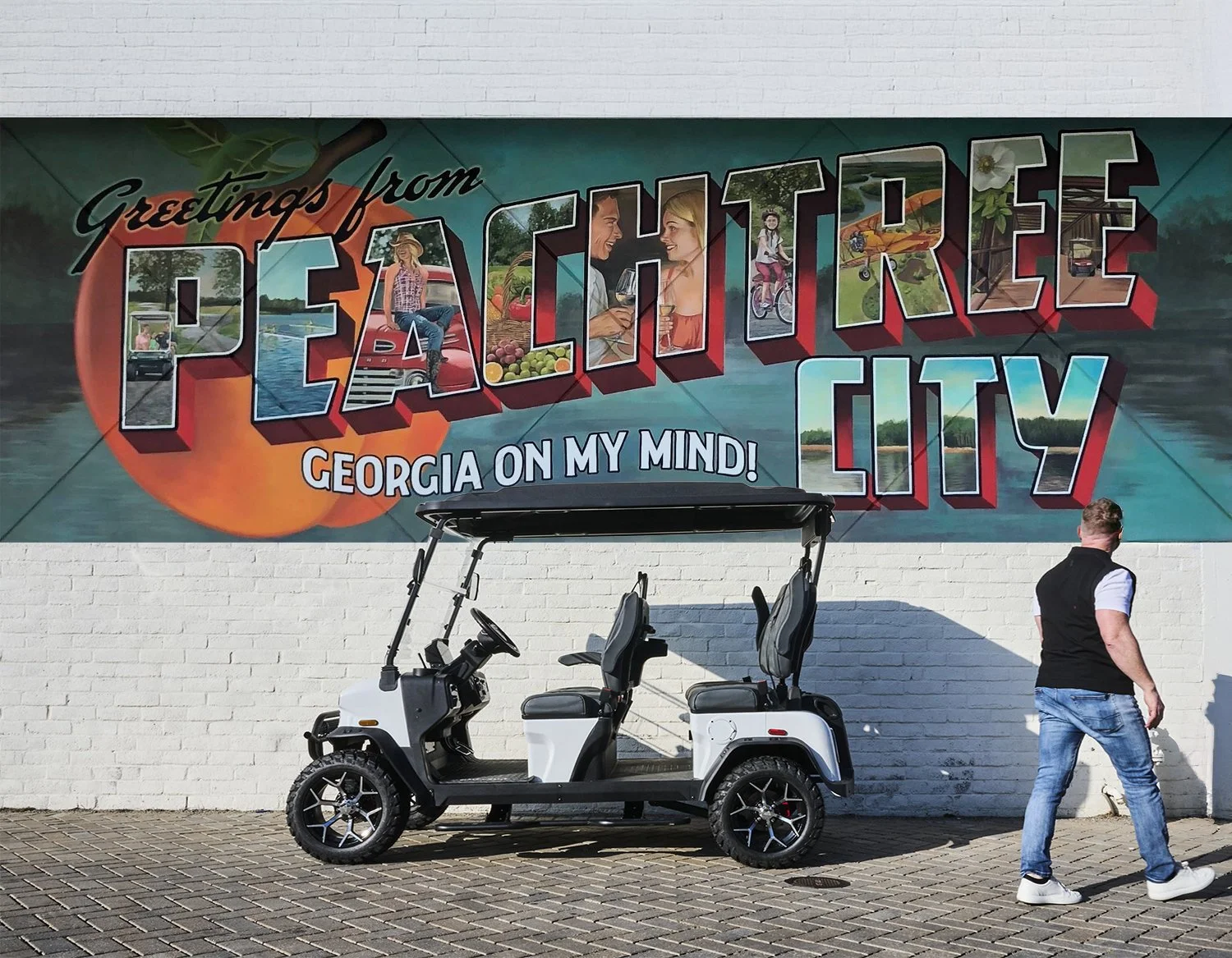
Want to see Peachtree City, Georgia the way the locals do?

Imagine a place where teenagers drive golf cars to school. Where you pull into a Chick-fil-A drive-through on a golf car. Where Target runs, dentist appointments, lake views, and everyday errands all connect through over 100 miles of dedicated paths weaving beneath a forest of Georgia pines.
This is Peachtree City, Georgia — the community that perfected golf car living.
If you’re curious how all of this actually looks and feels, you can see it firsthand.
Watch the complete Peachtree City tour on our YouTube channel.
The Path System:
The Backbone of the Lifestyle
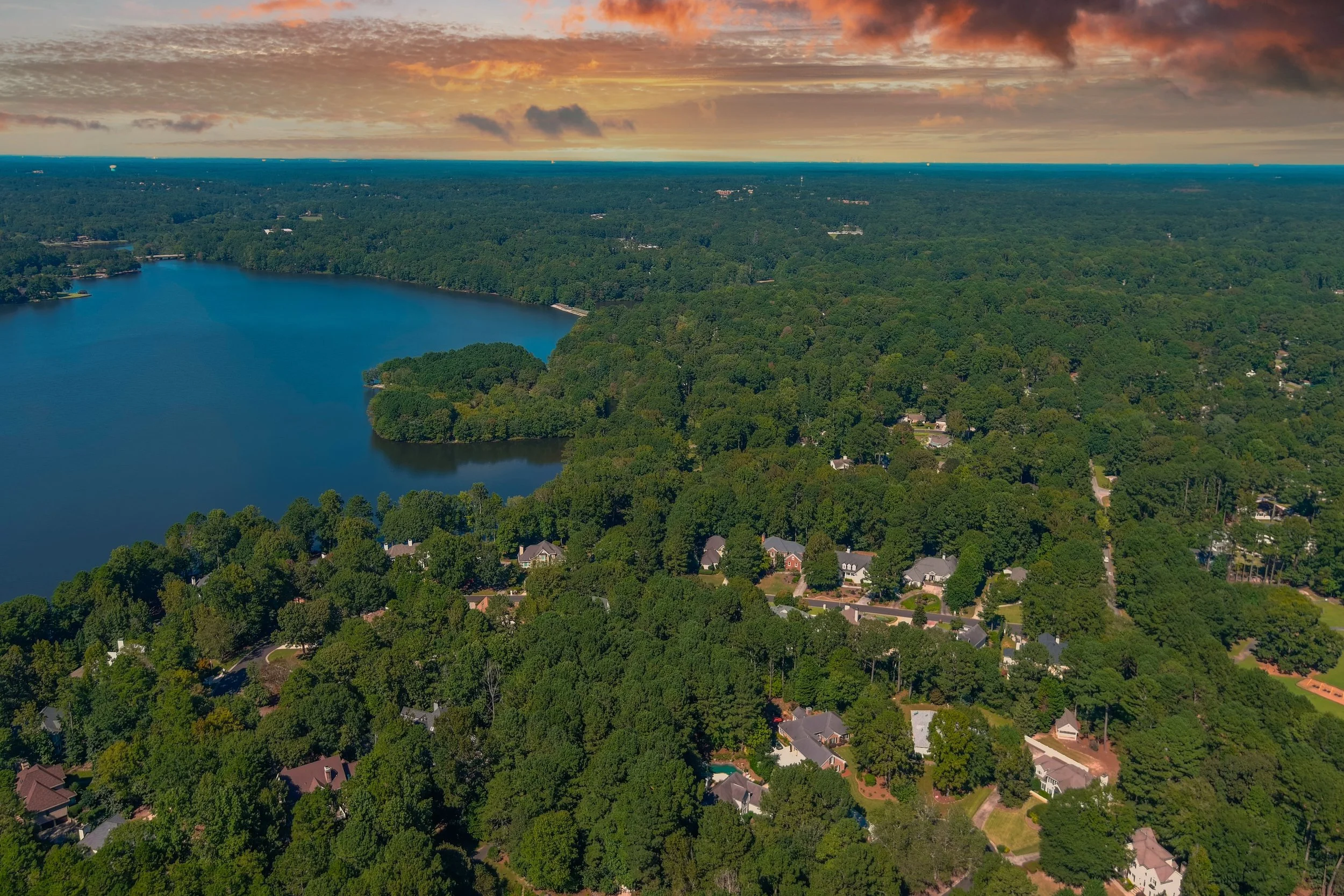
Since 1959, Peachtree City has been building something no other city has matched: a fully integrated golf car network designed from the ground up.
Today, that vision exists as:
100+ miles of paved multi-use paths
29 bridges crossing major roads
29 tunnels engineered to keep golf cars under and away from traffic
Golf cars here aren’t an afterthought. They move along a dedicated multi-use path system—shared with walkers, joggers, cyclists, and scooters—but designed from day one to support golf car travel. It’s a network the city maintains with real commitment, and one of the most comprehensive systems of its kind anywhere in America.
Locals navigate with a Peachtree City App and Google Maps in bicycle mode.
A small note: some older tunnels were built decades ago and weren’t designed for lifted cars, meaning certain modified models may face clearance limits. But the overall system is unmatched.
The Villages: Five Connected Communities
Once you understand the paths, the next layer is seeing how the city itself is organized around them.
Peachtree City is divided into five villages, each with its own amenities, shopping, and personality. All of them connect seamlessly through the path network.
The two most influential villages for me are Braelinn and Kedron. Each one shows a different side of the lifestyle — starting with Braelinn.
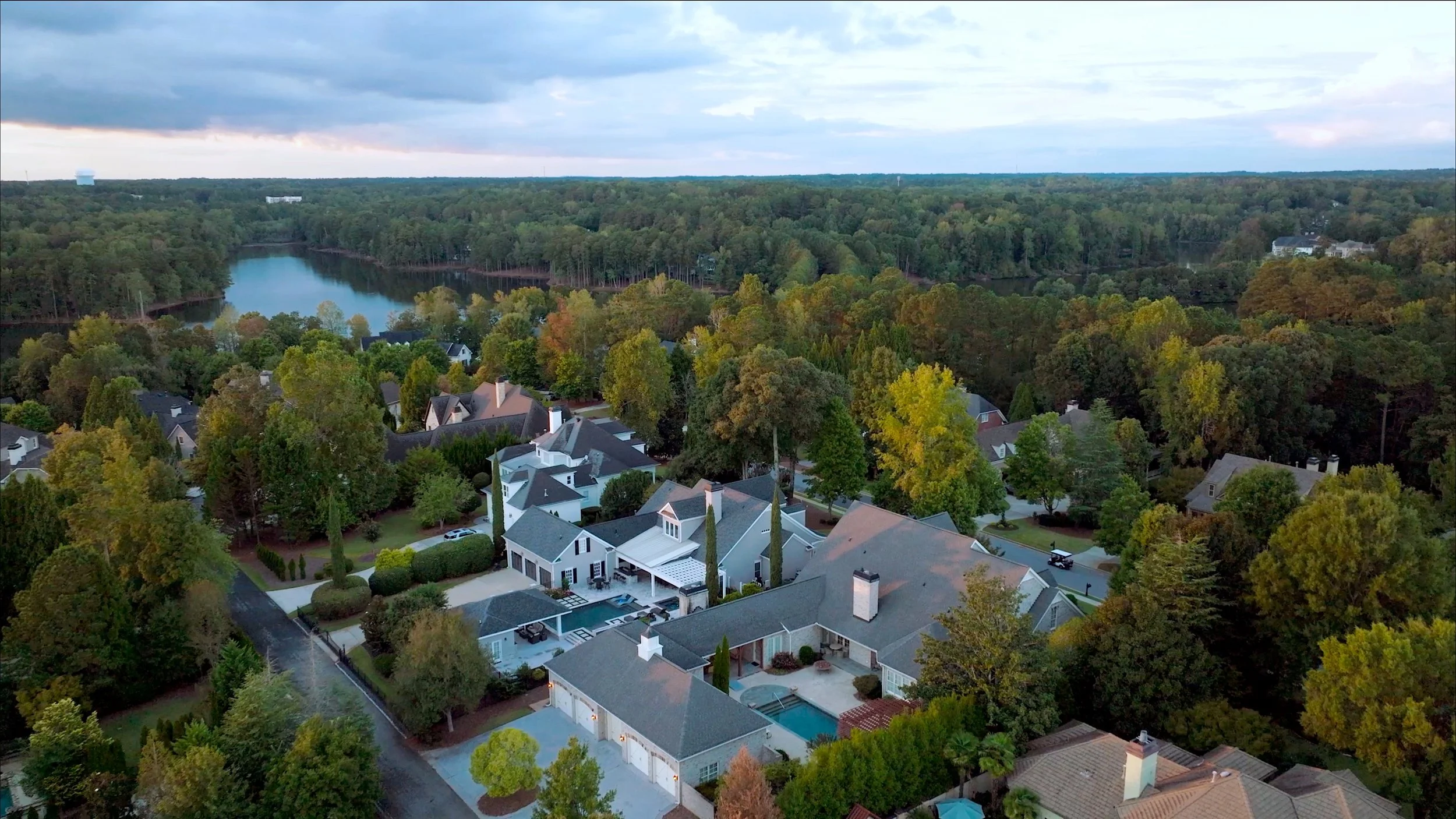
Braelinn Village: Recreation Meets Everyday Convenience
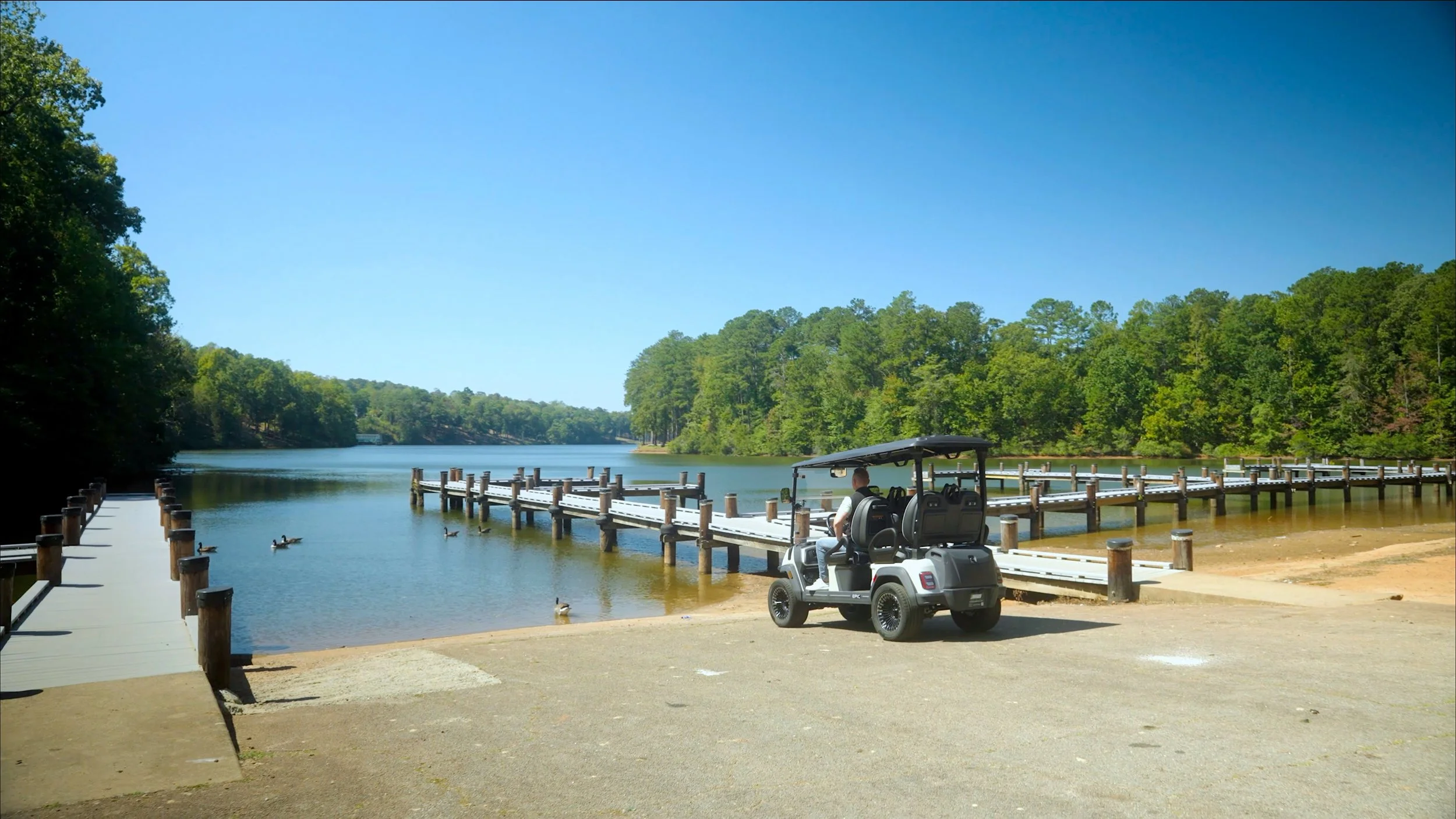
Braelinn delivers a blend of lifestyle and practicality, all accessible by golf car.
Highlights include:
Braelinn Golf Club — a private, members-only course
The Sports Club — full fitness facility with classes, pickleball and more
The Fred Amphitheater — outdoor live music venue hosting national acts
Flat Creek Nature Area — 513 acres of preserved wetlands with raised boardwalks
Braelinn Village Center — food, services, grocery store, and free cart charging stations
This village showcases the overlooked truth: golf car living isn’t a theme — it’s transportation built into everyday life. Head a little farther north, and the experience changes.
Kedron Village: Convenience at Scale
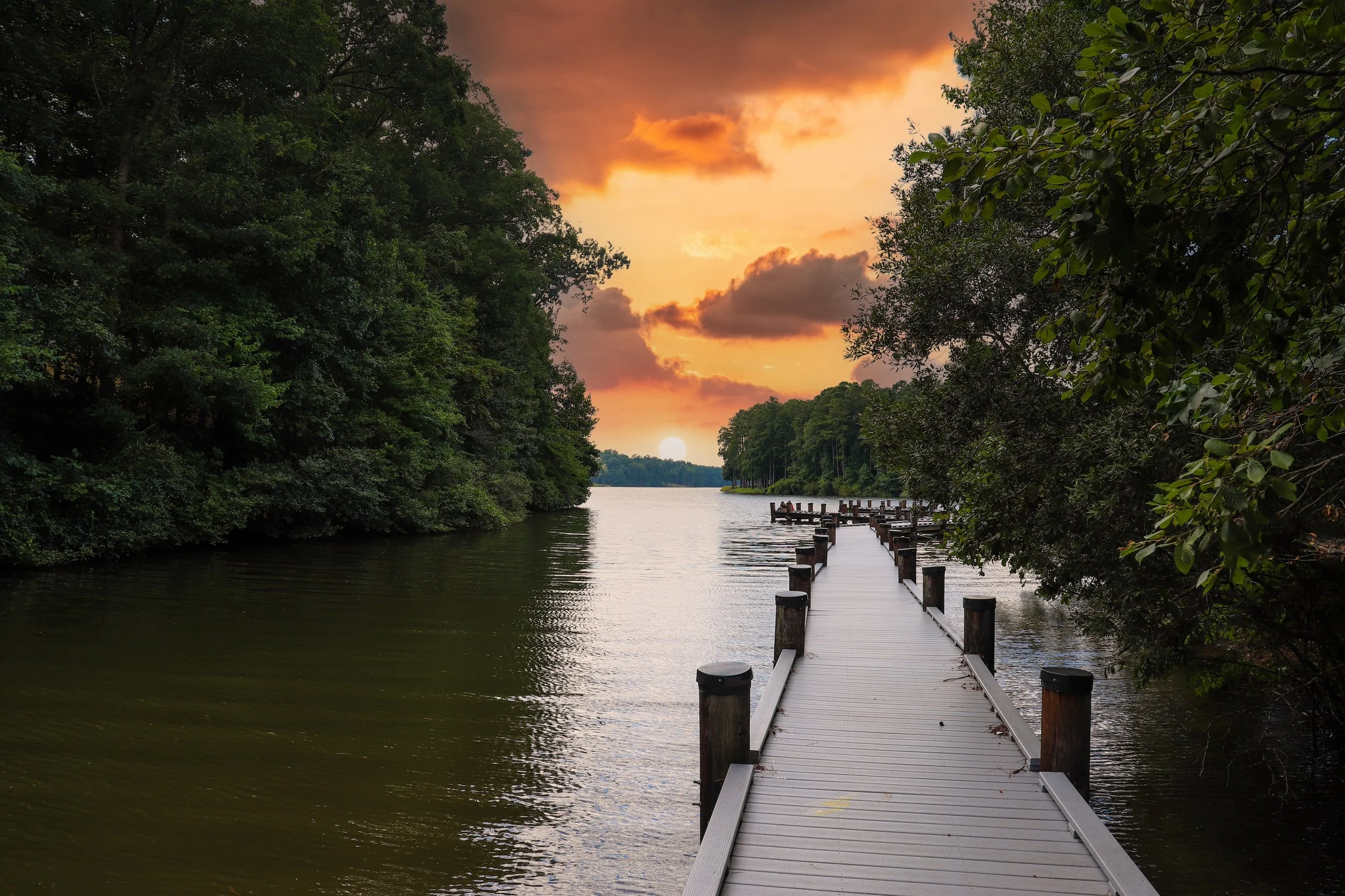
Kedron is where most visitors realize the system is real.
Lake Kedron, a 240-acre reservoir, sits at the heart of the village — quiet, scenic, and reserved for electric motors and non-motorized craft. Its north end, North Cove, features some of the area’s most distinctive homes with that historic Savannah charm, illuminated by gas lanterns beneath mature trees.
The shopping district includes both national and local favorites:
Kroger
Target
Petco
Ross
Restaurants and drive-throughs
Pharmacies, cleaners, and daycare
A 24-hour car and cart wash
This is the moment where people stop and say:
“Okay, I get why people love living here.”
But the lifestyle isn’t just about errands and amenities — it shapes daily life for families too.
Golf Cars at McIntosh High School
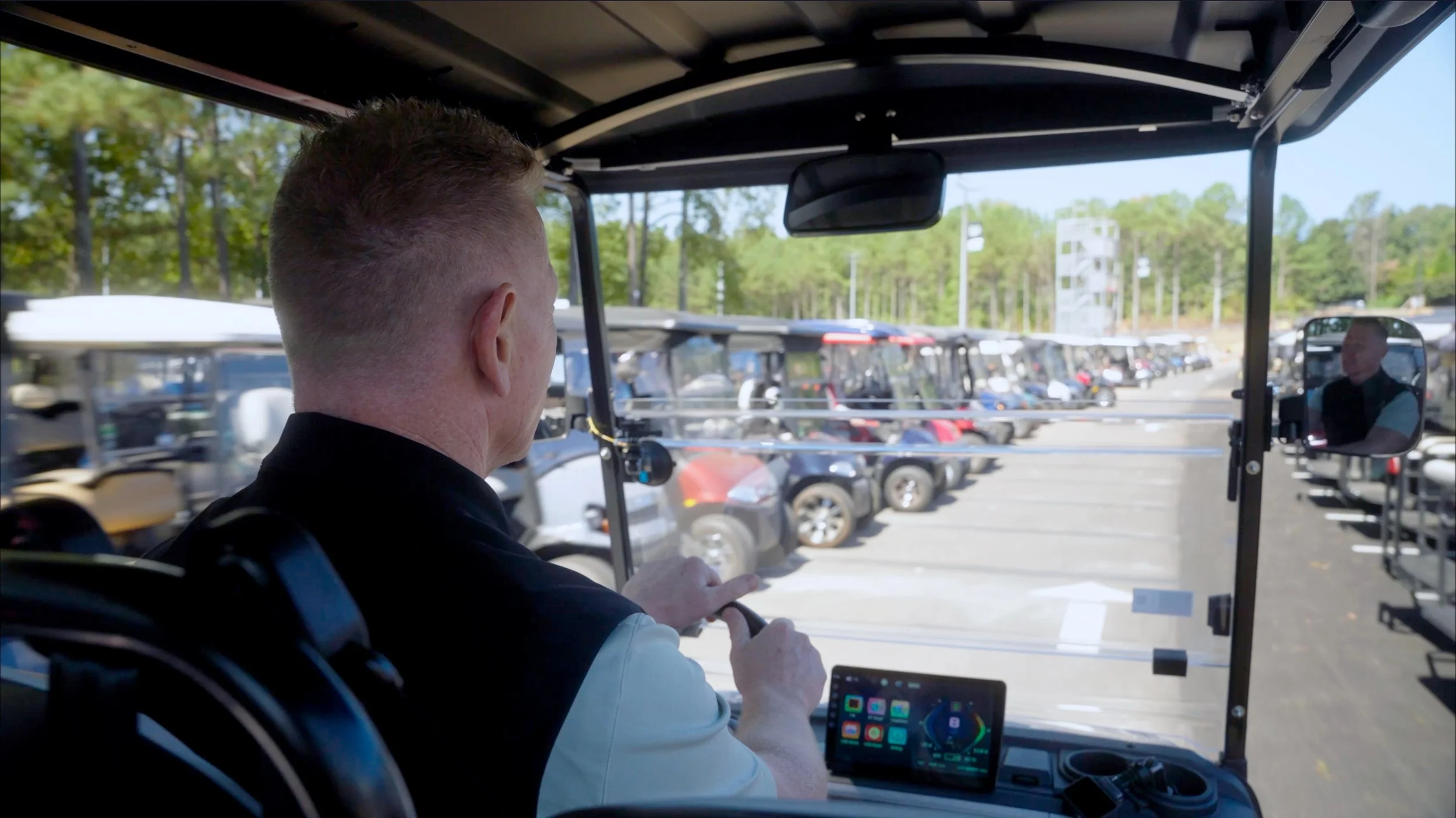
If you’ve never seen a high school parking lot filled with golf cars, you will here.
Hundreds of students drive themselves to school in golf cars — a longstanding tradition supported by clear guidelines and strict enforcement:
Valid driver's license
$40 annual permit
10 mph limit in car lots
5 mph limit in cart lots
Monday through Friday at 3:45 PM, the student-exodus looks like a golf car parade — and it’s uniquely Peachtree City.
Parents appreciate the independence and safety.
Teens love the freedom.
And that lifestyle doesn’t stop at the paths—it's built into the homes themselves.